Three councils unite behind Waihou–Piako–Coromandel unitary proposal
Published on 04 August 2026
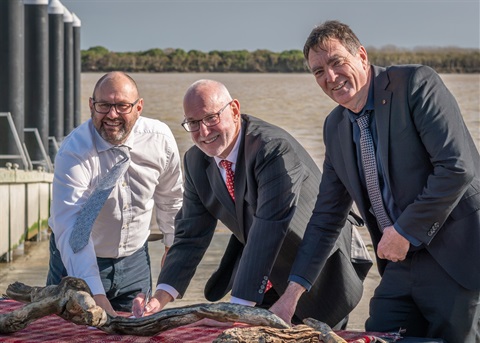
Hauraki, Matamata-Piako and Thames-Coromandel district councils have agreed to submit a joint proposal to the Government to form a Waihou–Piako–Coromandel unitary authority.
Each council approved the outline proposal at meetings held today and will now submit it through the Government’s Head Start process for local government reform. The reforms require councils to consider amalgamation and forming unitary authorities or enter a backstop process that would allow the Government to determine future council structures.
A Waihou–Piako–Coromandel unitary authority would bring district and regional responsibilities together across an area connected by its economy, catchments and coastal environment. It would coordinate decisions about land use, infrastructure, freshwater, flood protection, natural hazards and the coast as part of one connected system.
Hauraki Mayor Toby Adams said the proposal showed what the three councils could achieve by approaching change with unity and a clear focus on their communities.
“We are starting from strength. Our councils know their communities and have already shown that we can work effectively together. We understand where our communities differ and where they connect, and this proposal gives us a way to protect both.
“Standing together gives us the collective capability to shape what comes next while protecting local voice across all our communities.”
Connecting catchment to coast
The proposed authority would connect the Waihou and Piako catchments, the Hauraki Plains and the Coromandel Peninsula with the Firth of Thames and Tīkapa Moana/Hauraki Gulf.
Decisions made throughout these catchments affect rivers, productive land, settlements, coastal communities and ultimately the health of the Gulf. Bringing district and regional responsibilities together would create clearer accountability for managing these connections and strengthen the area’s ability to help implement Sea Change – Tai Timu Tai Pari.
Thames-Coromandel Mayor Peter Revell said the proposal reflected how the natural environment functions.
“What happens across our land and freshwater catchments affects the Firth of Thames and Tīkapa Moana/Hauraki Gulf. Our planning and investment need to recognise that connection.
“A catchment-to-coast authority would give councils, iwi, hapū and communities a stronger platform for coordinated action to improve the health of this national taonga.”
The proposed boundary aligns with the Waihou, Piako and Coromandel catchment authority proposed through the Pare Hauraki settlement. Affected iwi and hapū would work alongside the councils and Government to develop the final representation model and detailed arrangements, ensuring existing obligations, commitments and relationships are maintained and strengthened.
Protecting local voice while working at scale
The proposed governance model would combine a mayor and governing council with four to six directly elected statutory local boards. The local boards would hold protected responsibilities for specified local matters, while council services and delivery centres would remain within local communities.
This approach reflects feedback from the councils’ earlier engagement, which tested a broader East Waikato option that included South Waikato District. Participants valued strong local voice, better environmental and catchment management, fairness between communities and decisions remaining close to the people and places they affect.
South Waikato subsequently chose to support a Western Waikato option. The proposal was renamed Waihou–Piako–Coromandel to reflect its revised geography.
Matamata-Piako Mayor Ash Tanner said the proposal recognised the distinct identity of each community and the practical connections between them.
“This is something we didn’t ask for, but If change is to occur, partnership with Hauraki and Thames-Coromandel offers the best opportunity to achieve positive outcomes for our communities.
“Our communities have their own identities and priorities, and strong local representation must remain at the heart of future decision-making.
What happens next
The councils will submit the proposal and supporting documents to the Government by 9 August 2026. The Government expects to decide in September whether it can proceed to detailed design.
In-principle approval would begin detailed design with affected councils, iwi and hapū, post-settlement governance entities, communities and government agencies. The establishment date is yet to be determined and will be subject to Government decisions and enabling legislation.
Until any new arrangements take legal effect, Hauraki, Matamata-Piako and Thames-Coromandel district councils will continue to operate separately and provide their existing services.